

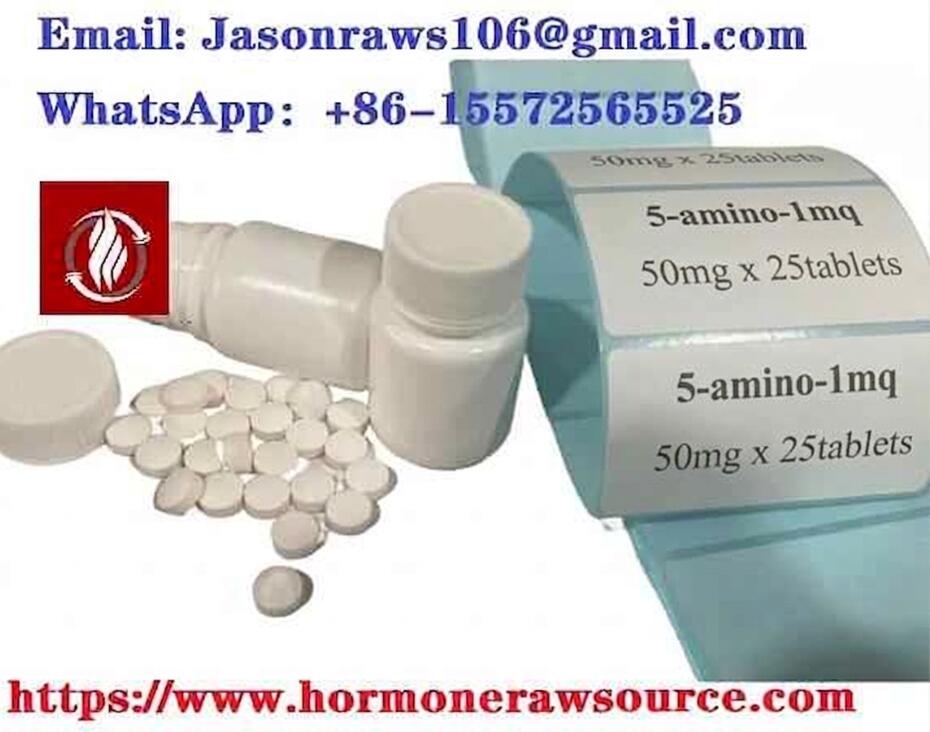
High-Quality STROMUSC 5-Amino-1MQ 50mg For Bodybuilding CAS:42464-96-0
In the sprawling ecosystem of performance-enhancing compounds, few molecules generate as much polarized discussion as 5-Amino-1MQ. Some athletes swear by its ability to strip visceral fat while preserving hard-won muscle tissue. Others dismiss it as overpriced hype riding on the coattails of a single mouse study. The truth, as with most things in this space, sits somewhere in the middle—and understanding precisely where requires a deep dive into the biochemistry, the evidence, and the practical realities of using this compound. This guide provides a comprehensive examination of top-quality 5-Amino-1MQ 50mg tablets from the perspective of the bodybuilder and physique athlete. We will dissect what this compound actually is, how it works at the molecular level, its practical applications in a training context, the realistic benefits one can expect, evidence-based dosing protocols, cycle design, pharmacokinetics, and the crucial question of post-cycle therapy.
What Is 5-Amino-1MQ?
5-Amino-1MQ-full chemical name 5-amino-1-methylquinolinium-is a small synthetic molecule, not a peptide, despite being frequently marketed alongside peptides in research-chemical circles. It has no amino-acid backbone and is biochemically classified as a quinolinium salt. This distinction matters practically: as a small molecule, it can be administered orally as a tablet or capsule, whereas most true peptides require injection due to digestive degradation.
The compound functions as a selective inhibitor of nicotinamide N-methyltransferase (NNMT), a cytosolic enzyme expressed at high levels in adipose tissue, liver, and certain cancers. In biochemical assays, 5-Amino-1MQ inhibits human NNMT with an IC50 of approximately 1.2 to 5.3 micromolar. This potency means it binds competitively to the enzyme's active site, blocking NNMT from carrying out its normal catalytic function.


The NNMT Problem
To understand why inhibiting NNMT matters for body composition, one must first understand what NNMT does. The enzyme's primary job is to methylate nicotinamide (a form of vitamin B3) using S-adenosylmethionine (SAM) as the methyl donor. This reaction produces two outputs: 1-methylnicotinamide (1-MNA) and S-adenosylhomocysteine (SAH).
When NNMT is overexpressed-which occurs in obesity, insulin resistance, and aging-it creates a dual drain on cellular resources. First, it consumes nicotinamide that would otherwise be recycled into NAD+ via the salvage pathway. Second, it depletes SAM, a universal methyl donor critical for gene regulation, lipid metabolism, neurotransmitter synthesis, and dozens of other enzymatic reactions.
By blocking NNMT, 5-Amino-1MQ preserves both pools. Nicotinamide remains available for NAD+ synthesis, and SAM levels are restored. This dual action is what distinguishes 5-Amino-1MQ from simple NAD+ precursors like NMN or NR, which only address the nicotinamide side of the equation.
The Bioavailability Caveat
Here is where the science gets uncomfortable. 5-Amino-1MQ carries a permanent positive charge due to its quaternary ammonium structure. While this charge makes it excellent at binding to NNMT's active site, it creates significant challenges for oral absorption. Similar charged compounds typically achieve less than 10% oral bioavailability, often closer to 2 to 5%. No published human pharmacokinetic study exists to confirm whether oral 5-Amino-1MQ reaches therapeutic tissue levels. This gap between molecular promise and practical delivery is the single most important caveat for any user to understand.
Features of Top-Quality 5-Amino-1MQ 50mg Tablets
When evaluating 5-Amino-1MQ products, several quality markers distinguish legitimate preparations from questionable alternatives.
Purity and Identity Verification: A top-quality product should be accompanied by a Certificate of Analysis (COA) showing HPLC purity above 98% and identity confirmation. Without this documentation, the user has no way of knowing what they are actually ingesting.
Precise 50mg Dosing: The 50mg tablet format has emerged as the industry standard for this compound. This dosage aligns with the most commonly referenced research protocols and provides a practical baseline from which users can titrate.
Lipophilic Formulation: Given the compound's lipophilic nature, quality tablets should be formulated to support absorption, ideally with instructions to take alongside dietary fat.
Third-Party Testing: Reputable manufacturers subject their products to independent laboratory analysis to verify potency and rule out contamination.
Applications in Bodybuilding
5-Amino-1MQ finds its primary application in the bodybuilding context during cutting phases and body recomposition protocols. Its appeal lies in its mechanism: it does not suppress appetite like GLP-1 agonists, nor does it stimulate the central nervous system like traditional fat burners. Instead, it purportedly shifts how the body partitions calories at the cellular level.
Cutting Phase Support
During caloric deficits, the body naturally upregulates NNMT expression in adipose tissue as a metabolic adaptation. This upregulation accelerates nicotinamide consumption and NAD+ depletion, potentially impairing mitochondrial function and metabolic rate. By inhibiting NNMT, 5-Amino-1MQ may counteract this adaptation, theoretically supporting continued fat oxidation even in a sustained deficit. The compound's effect on fat cells appears to be driven by increased energy expenditure rather than appetite suppression.
Muscle Preservation During Deficit
Perhaps the most compelling application for bodybuilders is muscle preservation during aggressive cuts. Preclinical data suggests that NNMT inhibition may help maintain muscle mass during rapid weight loss. The mechanism likely relates to the preservation of NAD+ and SAM pools, both of which are required for optimal muscle function and recovery. Some users report improved "mind-muscle connection" and training intensity while using the compound.
Recomposition Protocols
For athletes pursuing body recomposition-simultaneous fat loss and muscle gain-5-Amino-1MQ offers a non-hormonal tool that may support the metabolic environment conducive to this challenging goal. The compound's lack of appetite suppression means users can maintain adequate protein and calorie intake to support muscle synthesis while still experiencing metabolic benefits.
Benefits: What the Evidence Actually Supports
The benefits of 5-Amino-1MQ must be understood through the lens of the available evidence-which is almost entirely preclinical.
Documented Preclinical Benefits
The foundational study for 5-Amino-1MQ comes from Neelakantan et al. 2018, published in Biochemical Pharmacology. Researchers administered 20mg/kg of 5-Amino-1MQ to diet-induced obese mice three times daily over 11 days. Results included:
●35% reduction in fat mass without changes in food intake
●Reversal of obesity with reduced body weight and white adipose tissue mass
●Improved glucose tolerance and metabolic markers
●Lowered plasma total cholesterol and reduced adipocyte size
●No observable adverse effects at the tested doses
A 2024 study in aged mice demonstrated that NNMT inhibition improved muscle function, with grip strength improvements of approximately 25% with the compound alone and a 60% improvement when combined with exercise. Peak torque (strength) increased by roughly 70% compared to controls in some measures.
The Human Evidence Gap
The honest assessment is that no published human clinical trials exist for 5-Amino-1MQ as of mid-2026. No Phase 1, Phase 2, or Phase 3 human trials have been published in peer-reviewed journals. The compound does not appear on recognized compounding pharmacy lists for human therapeutic use. All efficacy claims rest entirely on animal and cell-culture models.
Anecdotal User Reports
In the absence of clinical data, user reports provide the only human perspective. These are mixed. Some users report noticeable fat loss and muscle preservation over 8-12 week cycles. Others report no perceptible effects even after completing a full container. The variation may reflect differences in product quality, individual metabolism, dosing protocols, or the compound's fundamental bioavailability limitations.
Dosage: The Current Understanding
The dosing of 5-Amino-1MQ remains an area of significant uncertainty, as no human dose-finding study has been published. Current protocols are extrapolated from animal research and user experimentation.
Standard Research Dosing
Most research-context protocols use 50 to 150 mg per day, administered orally in capsule form. The 50mg tablet represents the lower end of this range and is commonly used as a starting point.
Recommended Starting Protocol
For a first cycle, a conservative approach is warranted:
●Week 1-2: 50mg once daily, taken in the morning with a meal containing dietary fat
●Week 3-4: 50mg twice daily (morning and pre-workout or lunch) if well tolerated
●Maximum: 100-150mg per day, split into two doses
Some users report success with 50mg taken pre-workout. Others prefer splitting the dose to maintain more consistent blood levels throughout the day.
Timing Considerations
The compound's short half-life (discussed below) suggests that twice-daily dosing may be more effective than a single daily dose for maintaining sustained NNMT inhibition. Morning administration is recommended to avoid potential sleep disruption. Taking the tablet with dietary fat may support absorption of this lipophilic molecule.
Dose Titration
Users typically start at 50mg daily and increase only if well tolerated. Some individuals report benefits at 50mg, while others require 100-150mg to notice effects. The optimal dose appears to vary significantly between individuals, possibly due to differences in absorption, metabolism, or baseline NNMT expression.
Cycle Design
The cycle structure for 5-Amino-1MQ is derived from general NNMT inhibitor principles rather than specific clinical data.
Standard Cycle Length
The most commonly cited protocol is 8-12 weeks on, followed by 4 weeks off. This duration aligns with typical cutting phases and allows sufficient time for the compound's metabolic effects to manifest. The 4-week washout period theoretically allows the body's NNMT expression and NAD+ dynamics to normalize before the next cycle.
Cycle Applications
Cutting Cycle: 8-12 weeks at 50-100mg daily, initiated at the start of a caloric deficit. The compound may help maintain metabolic rate and preserve muscle tissue as the deficit progresses.
Recomposition Cycle: 8-12 weeks at 50-75mg daily, combined with a structured training program and maintenance or slight deficit calories.
GLP-1 Adjunct Cycle: Some users stack 5-Amino-1MQ with GLP-1 agonists like semaglutide or tirzepatide. The rationale is complementary: GLP-1 agonists reduce appetite, while 5-Amino-1MQ may support metabolic rate and muscle preservation. However, no published research exists on this combination.
Cycle Monitoring
Given the absence of human safety data, users should monitor for side effects and adjust or discontinue accordingly. Regular assessment of body composition, training performance, and subjective well-being can help determine whether the compound is providing benefit.
Half-Life and Pharmacokinetics
Understanding the compound's pharmacokinetics is essential for rational dosing.
Reported Half-Life
Pharmacokinetic data comes primarily from animal studies. In rats, the mean terminal elimination half-life after oral administration was approximately 6.90 hours. A separate study in rats reported half-lives of 3.80 ± 1.10 hours and 6.90 ± 1.20 hours depending on the specific formulation.
In mice, the half-life was reported at approximately 7 hours. Some sources cite a shorter half-life of 1.5-2 hours in animal models. A generally accepted working estimate for humans is approximately 4-7 hours.
Implications for Dosing
A half-life of approximately 7 hours means that a single daily dose will result in significant fluctuations in blood concentration throughout the day. By 24 hours post-dose, the compound would be largely eliminated. This supports twice-daily dosing to maintain more consistent NNMT inhibition.
Peak and Active Duration
The time to peak concentration is estimated at approximately 1.5 hours post-administration. The active duration-the period during which meaningful NNMT inhibition occurs-is roughly 8 hours. This further supports splitting the daily dose into morning and afternoon or pre-workout administrations.
Bioavailability Considerations
No human pharmacokinetic study has been published, meaning the actual absorption, distribution, metabolism, and excretion profile in humans remains unknown. The compound's permanent positive charge raises legitimate questions about oral bioavailability. Users should be aware that the compound may not reach therapeutic tissue levels in all individuals.
Post-Cycle Therapy (PCT)
A critical question for any bodybuilding compound is whether post-cycle therapy is required.
The Short Answer: No PCT Required
5-Amino-1MQ is non-hormonal and non-suppressive. It does not affect the hypothalamic-pituitary-gonadal axis, does not suppress endogenous testosterone production, and does not require the restoration of hormonal balance post-cycle.
Why PCT Is Unnecessary
The compound works through enzymatic inhibition of NNMT, a completely different pathway than hormonal agents. It does not bind to androgen receptors, does not affect luteinizing hormone or follicle-stimulating hormone, and does not interfere with steroidogenesis. There is no suppression to recover from, and no need for selective estrogen receptor modulators, aromatase inhibitors, or other PCT agents.
What to Do Post-Cycle
While no formal PCT is required, a washout period of approximately 4 weeks is recommended. This allows the body's metabolic systems to return to baseline and provides an opportunity to assess whether the compound provided meaningful benefits. During this period, users should maintain their training and nutrition protocols and monitor for any changes in body composition, energy levels, or training performance.
Long-Term Considerations
The absence of human safety data means the long-term consequences of NNMT inhibition remain unknown. The compound affects SAM-dependent methylation pathways, which touch DNA methylation and epigenetic regulation. This theoretical risk-while not observed in animal studies-suggests that cycling on and off is prudent until more data becomes available.
Clinical Data
| Brand | STROMUSC |
|
Trade names |
5-amino-1-methylquinolinium,SCHEMBL6403148,CHEMBL4116828, ZMJBCEIHNOWCMC-UHFFFAOYSA-O,STL196667 |
|
CAS |
42464-96-0 |
|
Molar mass |
159.21 |
|
Formula |
C10H11N2 |
|
Purity |
Above 98% |
|
Apprarance |
50mg*25 |
Any needs, please contact us
Email: Jasonraws106@gmail.com
WhatsApp: +86-15572565525
Telegram: +86-15871669785


Conclusion: A Tool, Not a Miracle
5-Amino-1MQ 50mg tablets represent an intriguing but unproven tool in the bodybuilding supplement arsenal. The compound's mechanism-NNMT inhibition with subsequent NAD+ preservation and SAM restoration-is biochemically sound and supported by compelling preclinical data. The 2018 mouse study demonstrating 35% fat mass reduction without appetite suppression is genuinely impressive. The 2024 data showing improved muscle function in aged mice adds another layer of interest.
However, the gap between mouse studies and human outcomes is substantial. The compound's quaternary ammonium structure raises legitimate questions about oral bioavailability. No human pharmacokinetic data exists. No human clinical trials have been published. The user reports are mixed, with some experiencing noticeable benefits and others reporting no effects.
For the informed athlete willing to accept the uncertainties, a cycle of 8-12 weeks at 50-100mg daily, split into two doses and taken with dietary fat, represents a reasonable experimental protocol. No PCT is required. Side effects appear mild in available reports.
But the honest conclusion is this: 5-Amino-1MQ is a research compound with a promising preclinical profile and an unproven human track record. It is not FDA-approved for any indication. It has zero published Phase 2 or Phase 3 human trials. Anyone using it is participating in an uncontrolled experiment with unknown efficacy and safety parameters.
Whether that experiment is worth undertaking depends on one's risk tolerance, budget, and realistic expectations. For those who proceed, selecting a top-quality product with verified purity and following a thoughtful, conservative protocol is essential.
Hot Tags: high-quality stromusc 5-amino-1mq 50mg for bodybuilding cas:42464-96-0, China high-quality stromusc 5-amino-1mq 50mg for bodybuilding cas:42464-96-0 manufacturers, suppliers, factory

