

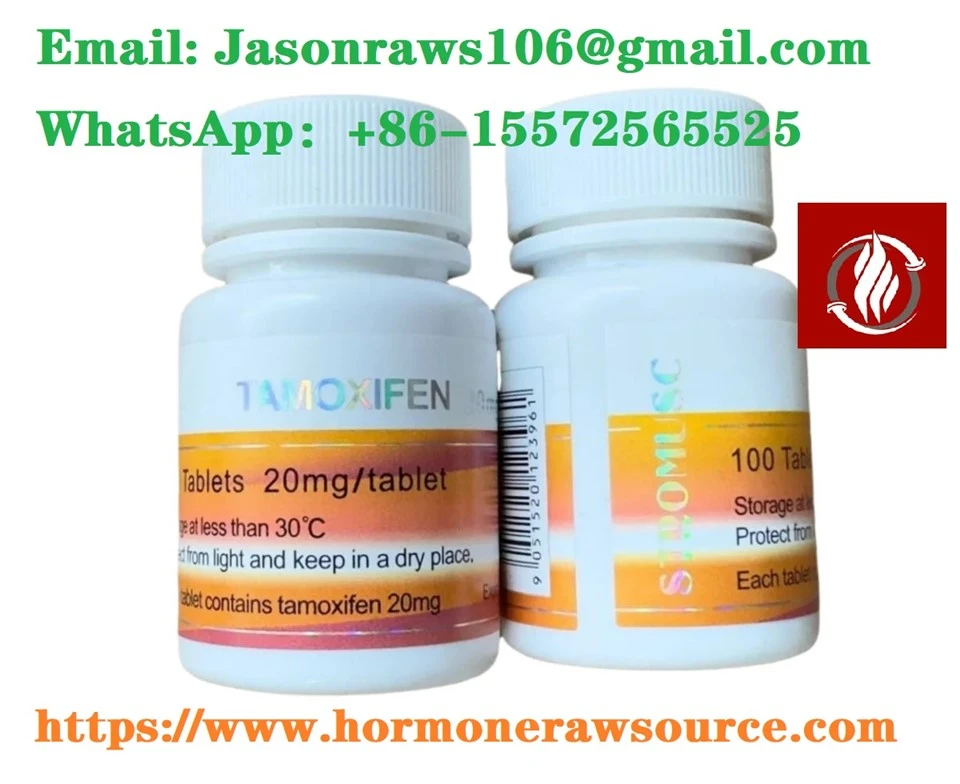
Premium Brand STROMUSC Nolvadex(Tamoxifen)20mg For Bodybuilding CAS:10540-29-1
Within the niche world of performance enhancement, few compounds carry the same paradoxical reputation as tamoxifen. To the medical establishment, it is a life-saving adjuvant therapy for hormone-receptor-positive breast cancer, a drug that has saved countless lives since its approval in 1977. To the bodybuilder, however, it is known almost exclusively by its most famous trade name—Nolvadex—and occupies a hallowed, albeit controversial, place as the cornerstone of post-cycle therapy (PCT) and the first line of defense against gynecomastia. This article examines the specific presentation of Premium Brand Nolvadex in a 20 mg oral tablet, dissecting its mechanism, its application in the gym, and the protocols that have grown around it, while separating the pharmacological reality from forum lore. The distinction of "Premium Brand" in this context is not merely marketing fluff. In an underground market flooded with underdosed or impure products, a premium designation implies a standard of manufacturing consistency, accurate dosing, and pharmaceutical-grade purity. For a compound like tamoxifen, where the therapeutic window and the precision of the dose are critical to both safety and efficacy, this reliability is not a luxury—it is a fundamental requirement. A 20 mg tablet of questionable provenance is a variable that no athlete can afford when attempting to manipulate the delicate feedback loops of the endocrine system.
What It Is: The Selective Modulator
Chemically, tamoxifen is a triphenylethylene derivative and belongs to a class of drugs known as Selective Estrogen Receptor Modulators (SERMs). The term "selective" is the key to understanding its entire clinical personality. Unlike aromatase inhibitors (AIs) such as anastrozole or letrozole, which systematically suppress the production of estrogen by blocking the aromatase enzyme, tamoxifen does not lower circulating estrogen levels. Instead, it travels through the body and competes with estrogen for binding at the receptor site, but its behavior upon binding varies dramatically depending on the tissue.
In breast tissue and, crucially for the bodybuilder, in the hypothalamus and pituitary gland, tamoxifen acts as a potent antagonist. It occupies the estrogen receptor and blocks the proliferative and feedback signals that estrogen would normally initiate. In other tissues, such as the liver and bone, it behaves as a partial agonist, exerting a mild estrogenic effect. This tissue-specific duality is what makes it both a therapeutic agent and a tool for the chemically enhanced athlete. A premium 20 mg tablet delivers a precise dose of tamoxifen citrate, typically equivalent to 30.4 mg of the citrate salt to yield 20 mg of the active base, ensuring that the pharmacokinetic profile is predictable.


Key Features and Pharmacokinetics
The defining pharmacokinetic feature of tamoxifen is its exceptionally long half-life. The parent compound has a half-life of approximately 5 to 7 days, but its primary active metabolites, 4-hydroxytamoxifen and endoxifen, exhibit an even more extended duration of action, with the active metabolite half-life stretching to roughly 14 days. This long tail is a double-edged sword. On one hand, it allows for once-daily dosing and provides a relatively forgiving buffer against a missed dose. On the other, it means that steady-state concentrations take weeks to achieve, and the drug's effects-both therapeutic and adverse-linger long after the last tablet is swallowed.
A critical, often-overlooked feature is the drug's dependence on the CYP2D6 enzyme for conversion into its most potent form, endoxifen. Genetic variations in this enzyme mean that a significant portion of the population (approximately 7–10% of Caucasians) are "poor metabolizers," meaning they derive substantially less benefit from a standard dose. Furthermore, co-administration of common antidepressants like fluoxetine or paroxetine, which are potent CYP2D6 inhibitors, can cripple the drug's efficacy. For the bodybuilder, this underscores the importance of sourcing from a brand that guarantees the stability of the active ingredient, as the variable is already significant within the user's own biology.
Applications in Bodybuilding: Two Distinct Roles
Tamoxifen's use in the fitness community is bifurcated into two distinct, albeit overlapping, applications: on-cycle gynecomastia management and off-cycle hormonal recovery.
The first application is as an on-cycle "rescue" agent. When a bodybuilder uses aromatizable anabolic steroids (such as testosterone, Dianabol, or Deca-Durabolin), the excess estrogen can stimulate breast tissue, leading to the development of gynecomastia-colloquially known as "gyno." The first signs are often itchy, sensitive, or puffy nipples. Tamoxifen is the community's first-line defense here because it blocks the estrogen receptor in the breast directly, halting the proliferative signaling without crashing systemic estrogen levels. This is a crucial distinction: by preserving estrogen elsewhere in the body, the athlete maintains the anabolic and joint-protective benefits of the hormone while protecting the one tissue where it is unwanted. A typical flare-up protocol involves 20–40 mg daily until symptoms subside, after which the dose is reduced or discontinued. It is important to note that tamoxifen is considered less effective for this purpose with 19-nor compounds like trenbolone or nandrolone, which can aggravate progesterone-related gyno, making a dopamine agonist a more appropriate choice in those specific cases.
The second, and more famous, application is in Post-Cycle Therapy (PCT) . When exogenous anabolic steroids are discontinued, the body's own testosterone production is suppressed because the hypothalamus and pituitary have been desensitized to estrogenic feedback. The system is essentially "asleep." Tamoxifen acts as a wake-up call. By blocking estrogen receptors at the pituitary, it removes the negative feedback brake, causing a surge in the release of Gonadotropin-Releasing Hormone (GnRH), which in turn stimulates the secretion of Luteinizing Hormone (LH) and Follicle-Stimulating Hormone (FSH). These hormones then signal the testes to resume testosterone production. Clinical data supports this mechanism: studies in men have shown that tamoxifen can increase LH levels by approximately 55–70% and total testosterone by over 50% within a few months of use. It is, in essence, a tool for rebooting the Hypothalamic-Pituitary-Testicular Axis (HPTA).
Dosage, Cycle, and PCT Protocol
The standard pharmaceutical presentation of Premium Brand Nolvadex is a 20 mg tablet, which aligns perfectly with the most common dosing protocols in bodybuilding. For on-cycle gynecomastia prevention or treatment, a dose of 10–20 mg per day is often sufficient to keep symptoms at bay or reverse early signs.
For PCT, the community consensus-built on decades of anecdotal success rather than a single FDA-approved guideline for this off-label use-revolves around a tapered protocol. The most widely referenced schedule is a 4- to 6-week course structured as follows:
●Weeks 1–2: 40 mg daily (two 20 mg tablets).
●Weeks 3–4: 20 mg daily (one 20 mg tablet).
●Weeks 5–6 (optional): 20 mg daily for extended recovery, particularly after a heavy cycle involving long-estered compounds or 19-nors.
The rationale for the front-loaded, higher dose is pharmacokinetic. Because tamoxifen takes weeks to reach steady-state, starting at 40 mg helps to achieve therapeutic blood concentrations more rapidly, providing a stronger initial stimulus to the pituitary. The taper to 20 mg maintains the stimulus while reducing the risk of side effects associated with higher cumulative doses.
The timing of the first dose is critical. PCT should not begin until the exogenous anabolic steroids have cleared the system to a point where they are no longer suppressing the HPTA. Starting too early is akin to stepping on the gas while the parking brake is still engaged. For a cycle ending with a long ester like testosterone enanthate or cypionate, the standard wait time is 2 to 3 weeks after the last injection. For shorter esters like propionate, PCT can begin within 3 to 5 days. Some protocols incorporate Human Chorionic Gonadotropin (hCG) in the final weeks of the cycle or the first weeks of PCT to prime the testes, followed by tamoxifen to restore the pituitary signaling.
Benefits and the Broader Picture
The primary benefit of tamoxifen in this context is HPTA restoration. By accelerating the return of endogenous testosterone production, it helps the athlete retain a greater portion of the muscle mass gained during the cycle and mitigates the psychological and physiological crash associated with post-cycle hypogonadism. A secondary benefit is its favorable effect on the lipid profile. Because tamoxifen acts as an estrogen agonist in the liver, it can help improve the HDL/LDL ratio, which is often adversely affected by anabolic steroid use. It also helps maintain bone mineral density during the hormonal transition of PCT, thanks to its estrogenic action in bone tissue.
Safety, Side Effects, and the Reality of Risk
No discussion of tamoxifen is complete without addressing its safety profile, which is frequently downplayed in fitness circles. While generally well-tolerated for short PCT courses, it is not a benign compound. The most serious risk, carrying an FDA boxed warning, is venous thromboembolism-the formation of blood clots that can lead to deep vein thrombosis, pulmonary embolism, or stroke. This risk is rare in the short-term, 4–6 week use typical of PCT but is a non-negotiable consideration, particularly for individuals with a personal or family history of clotting disorders.
Other common side effects include hot flashes, mood swings, and cognitive fogginess, sometimes referred to as "chemo brain" by users. Tamoxifen is also known to lower systemic IGF-1 levels by roughly 10–15%, which is a counterproductive effect for an athlete trying to maximize anabolism. Visual disturbances, including changes to the retina or cornea, are a documented risk, though they are more commonly associated with long-term, high-dose use in a clinical setting. Finally, as a partial estrogen agonist in the uterus, it carries a risk of endometrial changes-a concern primarily for female users but a reminder that the drug's selectivity is not absolute.
Clinical Data
| Brand | STROMUSC |
|
Trade names |
Nolvadex, Genox, Tamifen, TMX |
|
CAS |
10540-29-1 |
|
Molar mass |
371.515 |
|
Formula |
C26H29NO |
|
Purity |
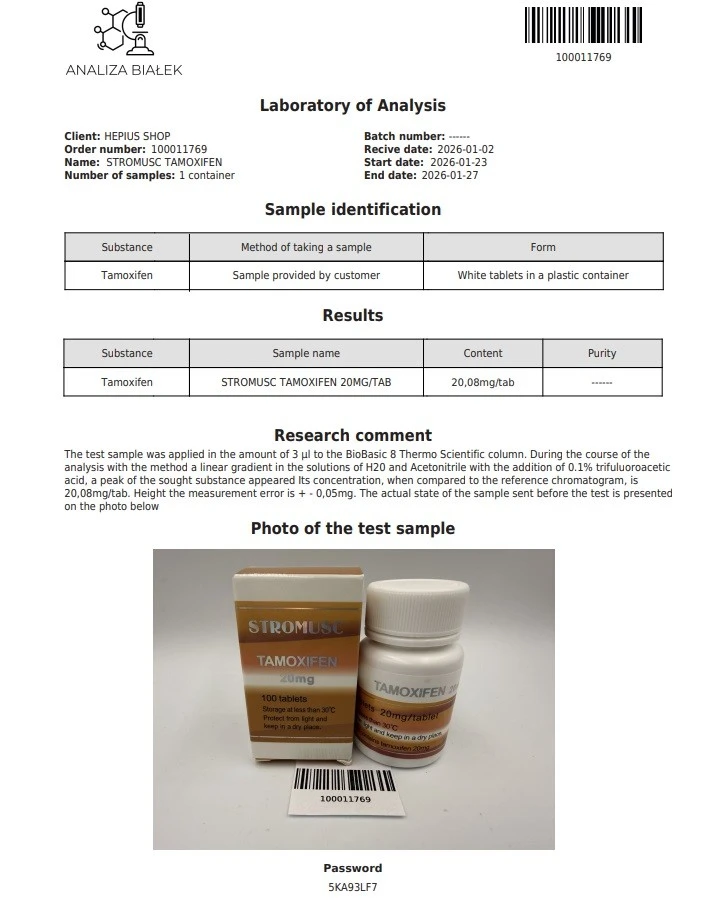
Above 98% |
|
Apprarance |
20mg*100 |
Any needs, please contact us
Email: Jasonraws106@gmail.com
WhatsApp: +86-15572565525
Telegram: +86-15871669785


Conclusion
Premium Brand Nolvadex (Tamoxifen) 20 mg is, therefore, a tool of precision. It is not a muscle-building drug, nor is it an aromatase inhibitor. It is a selective modulator designed to exploit the tissue-specific nature of estrogen signaling. For the bodybuilder, its value lies in its ability to shield the breast from unwanted estrogenic assault while simultaneously rebooting the suppressed endocrine system. Its long half-life and proven mechanism make it a reliable, if imperfect, ally. However, the very same pharmacological power that makes it effective also demands respect. The risks of thromboembolism, the interaction with CYP2D6 metabolism, and the potential for a temporary suppression of IGF-1 are not theoretical footnotes; they are the price of admission. Understanding this compound means recognizing that it is a pharmacological reset button-one that must be pressed with a clear understanding of its pharmacokinetics, its proper timing, and the irreplaceable value of a premium, accurately dosed product.
Hot Tags: premium brand stromusc nolvadex(tamoxifen)20mg for bodybuilding cas:10540-29-1, China premium brand stromusc nolvadex(tamoxifen)20mg for bodybuilding cas:10540-29-1 manufacturers, suppliers, factory

