

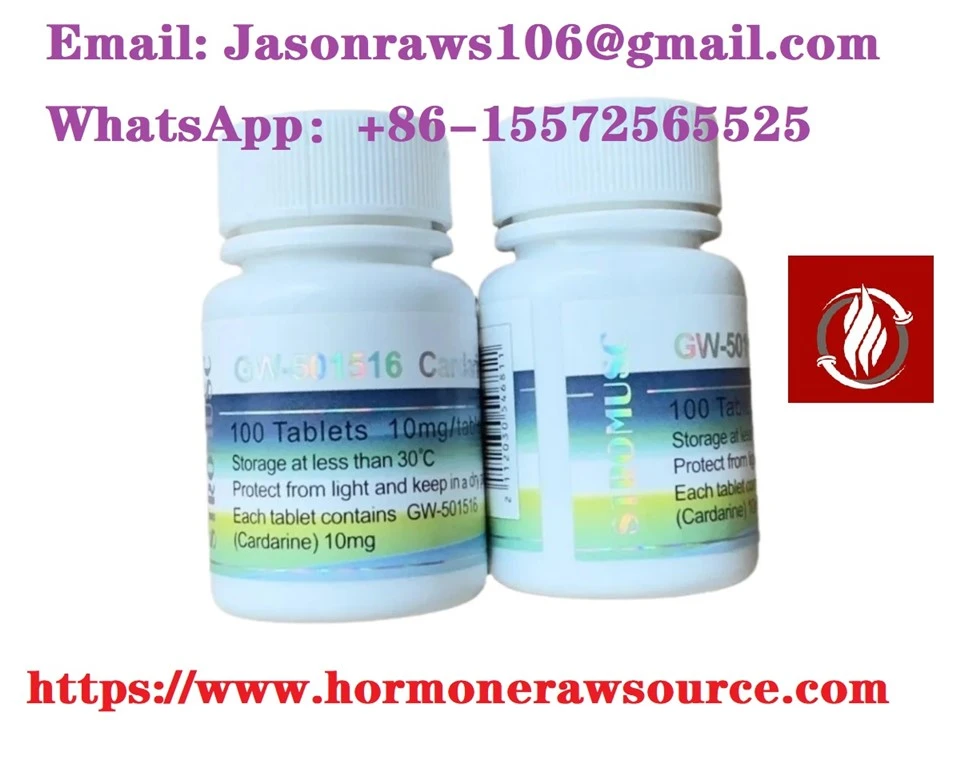
High-Quality STROMUSC GW501516(Cardarine)10mg For Bodybuilding CAS:317318-70-0
GW501516—more commonly known as Cardarine or Endurobol—occupies a peculiar space in the bodybuilding landscape. Walk into any gym conversation about performance enhancers, and you will hear it lumped together with SARMs like Ostarine or RAD-140. This categorization is fundamentally incorrect, yet it persists because Cardarine is almost always sold alongside SARMs and produces effects that bodybuilders find highly desirable. The compound was never intended for athletic enhancement. Originally developed through a joint research program between GlaxoSmithKline and Ligand Pharmaceuticals in the early 1990s, GW501516 was designed to treat metabolic and cardiovascular conditions—dyslipidemia, obesity, and diabetes. It progressed through Phase I and Phase II clinical trials before being abruptly abandoned in 2007. The reason? Preclinical toxicology studies revealed that the drug caused tumors to develop rapidly across multiple organ systems in rodents. Despite this, Cardarine never disappeared from the grey-market research chemical ecosystem. Its effects—dramatic endurance increases, accelerated fat loss, and favorable lipid alterations—proved too attractive to ignore. Today, it remains one of the most discussed yet misunderstood compounds in the performance enhancement world. This analysis examines GW501516 from every angle relevant to the bodybuilder: its mechanism, practical applications, dosing protocols, cycle structure, pharmacokinetics, and the ever-present question of post-cycle therapy.
What GW501516 Actually Is
Cardarine is a small-molecule, orally bioavailable, synthetic diarylthiazole that functions as a highly selective agonist of peroxisome proliferator-activated receptor delta (PPARδ). The selectivity is remarkable-GW501516 binds to PPARδ with an EC50 of approximately 1 nM and demonstrates roughly 1,000-fold selectivity over PPARα and PPARγ receptors. This specificity is what drives its unique effects.
To understand Cardarine, one must first understand PPARδ. This nuclear receptor is expressed throughout skeletal muscle, liver, adipose tissue, and the gastrointestinal tract. When activated, PPARδ functions as a transcription factor-it binds to specific DNA sequences and upregulates genes involved in fatty acid oxidation, mitochondrial biogenesis, and energy uncoupling.
Upon binding to PPARδ, Cardarine triggers a conformational change that promotes heterodimerization with the retinoid X receptor (RXR). The resulting complex binds to PPAR response elements in the promoter regions of target genes, initiating a cascade of transcriptional changes. The net effect is a metabolic reprogramming that shifts the body's energy preference from glucose toward fatty acids.
In skeletal muscle specifically, this PPARδ activation transforms type II (fast-twitch, glycolytic) muscle fibers toward a more oxidative phenotype resembling type I (slow-twitch) fibers. This fiber-type shift is not merely theoretical-preclinical studies in mice demonstrated that GW501516 treatment increased running endurance by up to 68% compared to controls.
Critically, Cardarine does not interact with the androgen receptor. It does not aromatize, does not suppress the hypothalamic-pituitary-gonadal axis, and does not affect endogenous testosterone production. This non-hormonal mechanism fundamentally distinguishes it from SARMs, which bind to androgen receptors and can cause suppression. Cardarine is a metabolic modulator, not a hormonal one.


Key Features of Top-Quality GW501516
Non-Hormonal Mechanism - The defining feature. Cardarine operates through PPARδ activation rather than androgen receptor binding. This means no testosterone suppression, no estrogenic side effects, no gynecomastia risk, no hair loss from androgenic activity, and no virilization in women.
Oral Bioavailability - Cardarine is orally active with approximately 50% bioavailability. This makes administration straightforward-no injections, no complicated protocols. Peak plasma concentrations are reached in roughly 1.5 hours.
Long Half-Life - With an estimated half-life of 16 to 24 hours, Cardarine supports once-daily dosing. This pharmacokinetic profile means steady-state concentrations are achieved within three to four days of daily administration.
Selective PPARδ Agonism - The compound's 1,000-fold selectivity over PPARα and PPARγ means its effects are focused on fatty acid oxidation pathways without the off-target effects associated with activating other PPAR subtypes.
No Androgenic Activity - Cardarine carries an anabolic rating of 0 and an androgenic rating of 0 when benchmarked against testosterone. It builds no muscle directly but enables conditions conducive to muscle preservation and performance.
Lipid-Modulating Properties - Human trials demonstrated that GW501516 administration at 2.5 mg and 10 mg per day for two weeks reduced triglycerides by up to 30%, apolipoprotein B by 26%, LDL cholesterol by 23%, and increased HDL cholesterol by 15%.
Applications in Bodybuilding
Cardarine serves specific functions that no other compound quite replicates. Its applications fall into several distinct categories:
Cutting and Fat Loss - By shifting metabolic fuel preference toward fatty acid oxidation, Cardarine helps the body tap into fat reserves more efficiently. This effect is amplified during caloric restriction, where the compound preserves the body's ability to oxidize fat despite reduced energy intake.
Endurance Enhancement - This is Cardarine's most immediately noticeable effect. Users report being able to sustain cardio sessions for significantly longer periods at higher intensities. Rest periods between sets can be shortened, and overall training volume can increase substantially.
Muscle Preservation During Deficits - Cardarine exhibits anti-catabolic properties, preserving muscle mass during reduced-calorie diets by enabling the body to preferentially oxidize fat rather than breaking down muscle tissue for energy.
Lipid Profile Management - Bodybuilders running harsh oral anabolic steroids-compounds notorious for wrecking lipid profiles-often layer Cardarine to partially offset the cardiovascular damage.
PCT Support - Because Cardarine is non-suppressive and improves lipid profiles, it is sometimes incorporated into post-cycle therapy protocols to maintain performance and body composition during the recovery period.
Documented Benefits
Dramatic Endurance Increases - The most prominent and reliably reported effect. The metabolic shift toward fatty acid oxidation spares muscle glycogen, allowing for prolonged exertion without the typical energy crash.
Accelerated Fat Oxidation - PPARδ activation upregulates genes involved in beta-oxidation, effectively increasing the rate at which the body burns fat for fuel. This occurs even without a large caloric deficit.
Improved Cholesterol Profile - Unlike virtually every anabolic steroid, Cardarine improves lipid values. HDL increases, LDL and triglycerides decrease.
No Testosterone Suppression - The non-hormonal mechanism means natural testosterone production remains unaffected. This is particularly valuable for athletes who want performance benefits without compromising endogenous hormone production.
No Androgenic Side Effects - Users avoid the typical androgenic sides: acne, hair loss, prostate stimulation, and virilization.
Enhanced Recovery - By improving metabolic efficiency and reducing glycogen depletion during training, Cardarine may accelerate recovery between sessions.
Dosage: The 10mg Standard
The most commonly used dosage range is 10 mg to 20 mg per day. For the 10mg formulation specifically, this represents the entry-level dose and the sweet spot for many users.
Beginners typically start with 10 mg daily to assess individual response. More advanced users rarely exceed 20 mg per day. Dosing above 20 mg does not appear to produce proportionally greater benefits and only increases exposure without meaningful return.
Human clinical trials administered GW501516 at 2.5 mg, 5 mg, and 10 mg daily. The 10 mg dose represents the upper end of what was studied in humans and produced significant metabolic effects without the severe adverse events seen in animal studies at much higher doses.
Timing considerations: Because Cardarine reaches peak concentration in approximately 1.5 hours, many users take it 30 to 60 minutes before training. However, the long half-life means that timing is less critical than with shorter-acting compounds. Once-daily administration at any consistent time maintains steady-state levels.
Some users prefer to split the dose-10 mg every 12 hours-particularly when running higher total daily amounts. For the standard 10 mg daily protocol, splitting is unnecessary given the 16-to-24-hour half-life.
Cycle Structure
Typical Cardarine cycles run 8 to 12 weeks. The 8-week cycle is the most common conservative approach, while 12-week cycles are employed by more experienced users seeking maximum results.
The 8-Week Protocol - Starting at 10 mg per day and maintaining that dose throughout. Some users increase to 15 mg or 20 mg in later weeks, though the marginal benefit of escalation is debated.
The 12-Week Protocol - Often run at a consistent 10 mg to 20 mg per day. The extended duration allows for more pronounced fat loss and endurance adaptations.
Cycle Intervals - Most users follow a cycle with 4 to 6 weeks off between cycles. This off-period allows receptor sensitivity to normalize and reduces cumulative exposure.
Stacking Considerations - Cardarine stacks effectively with SARMs and anabolic steroids. It is a staple in the "SARM Triple Stack" alongside Andarine (S4) and Ostarine (MK-2866) for recomposition purposes. When stacked with harsh compounds like Trenbolone, Cardarine helps offset cardiovascular strain and maintains endurance.
No Loading Phase Required - Unlike compounds that require saturation periods, Cardarine reaches steady-state within three to four days of daily dosing. Effects become noticeable within the first week.
Half-Life and Pharmacokinetics
The half-life of Cardarine is estimated at 16 to 24 hours. This estimate derives from non-clinical pharmacokinetic data, as comprehensive human pharmacokinetic studies were never published following the compound's abandonment.
A 24-hour half-life means that after a single 10 mg dose, approximately 5 mg remains in the system after 24 hours, 2.5 mg after 48 hours, and so on. With daily dosing, the compound accumulates to steady-state-the point at which intake equals elimination-within three to four days.
The long half-life supports once-daily dosing. Some sources suggest that the active duration extends to a full 24 hours. This pharmacokinetic profile makes Cardarine unusually convenient compared to compounds requiring multiple daily administrations.
Time to peak concentration is approximately 1.5 hours post-administration. This is why many users time their dose before training-the compound reaches maximum concentration just as the workout begins.
Bioavailability is approximately 50% for oral administration. This means a 10 mg oral dose yields approximately 5 mg of active compound reaching systemic circulation. The remainder is lost to first-pass metabolism in the liver.
Post-Cycle Therapy: The Clear Answer
Cardarine does not require post-cycle therapy.
This is not a matter of debate or individual variation-it is a pharmacological certainty. Cardarine does not suppress the hypothalamic-pituitary-gonadal axis. It does not bind to androgen receptors. It does not affect testosterone production. There is nothing to "restore" because nothing was suppressed.
The confusion arises because Cardarine is frequently grouped with SARMs, which do suppress natural testosterone and do require PCT. But Cardarine is not a SARM. It is a PPARδ agonist with an entirely different mechanism of action.
In fact, Cardarine is sometimes used during PCT for other compounds. Its non-suppressive nature, combined with its fat-burning and endurance-enhancing effects, makes it a useful tool for maintaining performance and body composition during the recovery period from suppressive cycles.
The only circumstance in which PCT would be relevant to a Cardarine cycle is if the user is stacking it with suppressive compounds. In that case, PCT addresses the suppression caused by the other compounds, not the Cardarine.
Practical Considerations for the 10mg User
For those who choose to use Cardarine at the 10 mg dose, several practical considerations emerge:
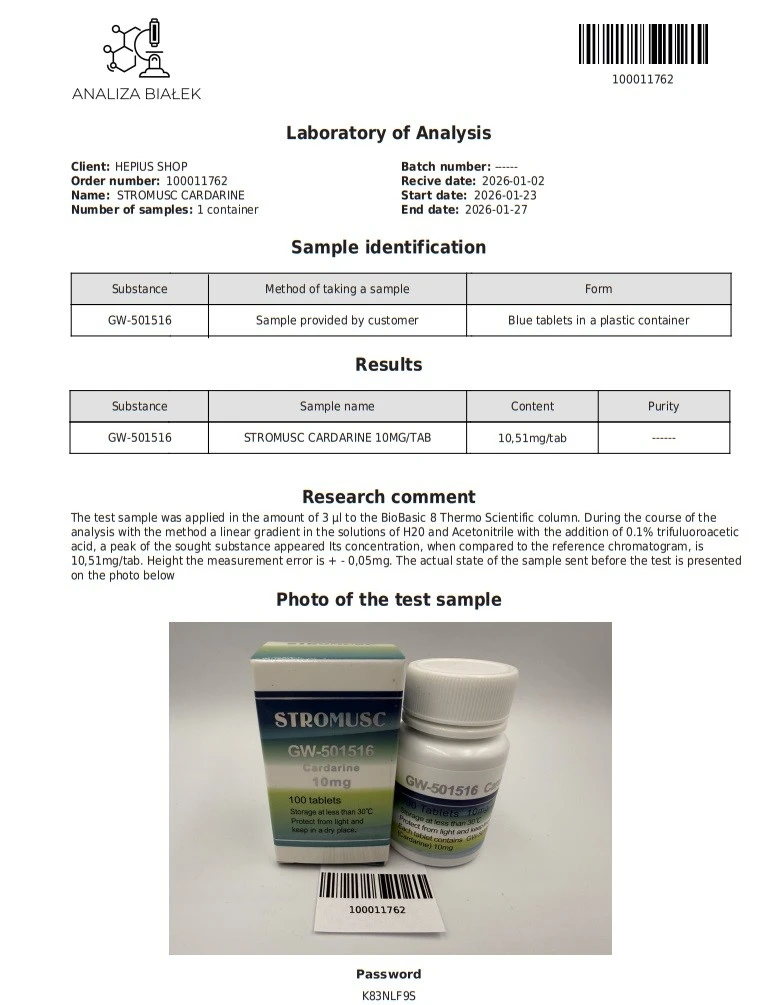
Sourcing - Cardarine is not a dietary supplement and is not approved for human consumption. It is sold through grey-market research chemical suppliers. Quality varies dramatically. Third-party testing is essential to confirm that the product contains what the label claims and is free from contaminants.
Administration - The 10 mg dose can be taken once daily at any consistent time. Taking it 30 to 60 minutes before training maximizes acute effects on performance.
Cycle Duration - An 8-week cycle at 10 mg daily is the conservative standard. Extending to 12 weeks increases exposure and potential risk without necessarily delivering proportionally greater benefits.
Monitoring - Blood work before, during, and after a cycle provides objective data on lipid changes and overall health markers. Given Cardarine's effects on lipid profiles, monitoring HDL, LDL, and triglycerides is particularly relevant.
Stacking - When stacking with other compounds, Cardarine's non-suppressive nature means it does not compound hormonal side effects. However, it also means it does not mitigate suppression from other compounds-that requires separate management.
Clinical Data
| Brand | STROMUSC |
|
Trade names |
GW-501, 516, GW1516, GSK-516, Cardarine,Endurobol |
|
CAS |
317318-70-0 |
|
Molar mass |
453.49 |
|
Formula |
C21H18F3NO3S2 |
|
Purity |
Above 98% |
|
Apprarance |
10mg*100 |
Any needs, please contact us
Email: Jasonraws106@gmail.com
WhatsApp: +86-15572565525
Telegram: +86-15871669785


Conclusion
GW501516 at 10 mg daily represents a unique tool in the bodybuilder's arsenal-a non-hormonal metabolic modulator that delivers endurance enhancement, fat loss acceleration, and lipid improvements without the side-effect profile associated with androgenic compounds. Its mechanism is elegant: PPARδ activation reprograms skeletal muscle toward fatty acid oxidation, creating conditions for sustained performance and efficient fat utilization.
The compound's long half-life supports convenient once-daily dosing. The 8-to-12-week cycle structure provides a window for meaningful adaptation. The absence of testosterone suppression means no PCT is required. These features make Cardarine unusually user-friendly from a protocol perspective.
But the cancer risk is real. It is not theoretical, not exaggerated, and not a matter of debate. GlaxoSmithKline walked away from billions in potential revenue because the safety signal could not be ignored. Every user must reckon with this reality.
For those who proceed, the 10 mg dose represents the most conservative effective approach-the dose that produced measurable benefits in human trials while minimizing exposure. It is the dose that balances efficacy against the unknown.
Hot Tags: high-quality stromusc gw501516(cardarine)10mg for bodybuilding cas:317318-70-0, China high-quality stromusc gw501516(cardarine)10mg for bodybuilding cas:317318-70-0 manufacturers, suppliers, factory, MK2866 Treat Muscular Dystrophy and Osteoporosis, OTR-AC, RAD150, SR9009, SR9011, YK11

