

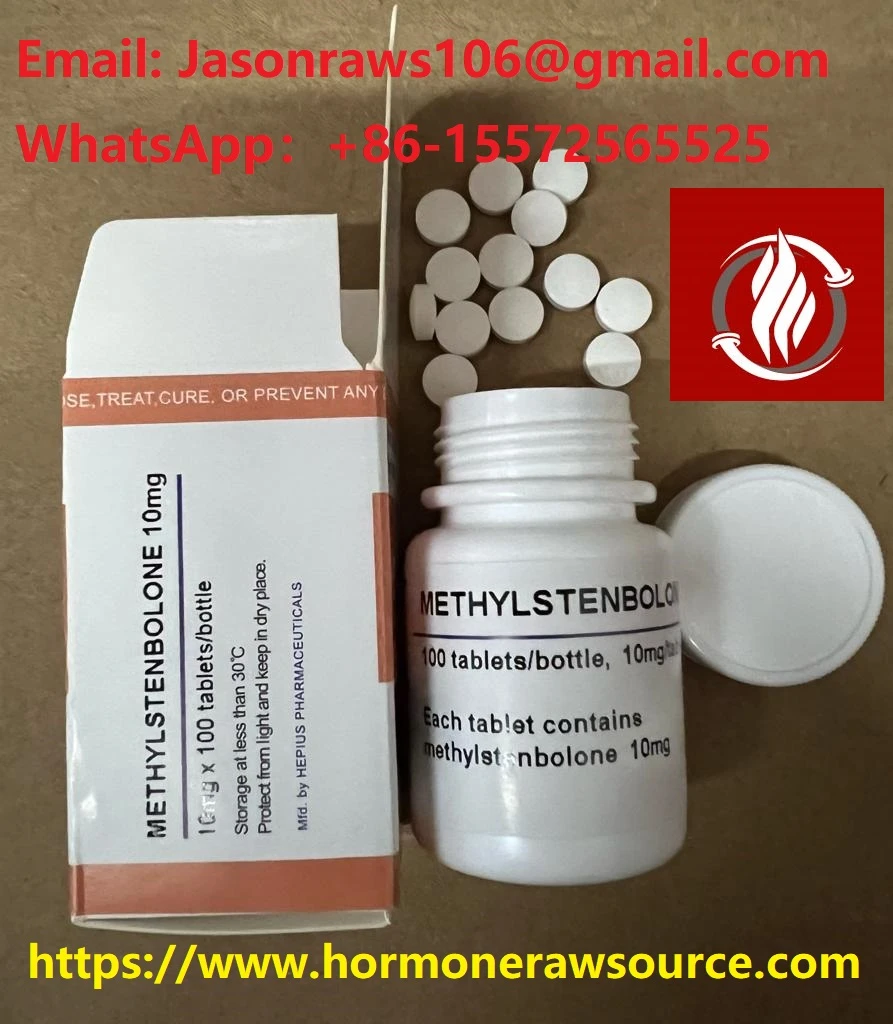
High-Quality STROMUSC 17a-Methyl-1-testosterone(M1T)10mg For Bodybuilding CAS:65-04-3
17α-Methyl-1-testosterone, abbreviated throughout underground chemical literature as M1T, represents a doubly modified synthetic analogue of endogenous testosterone. The parent structure undergoes two critical alterations that fundamentally reshape its pharmacological behavior. First, the installation of a methyl group at the seventeenth alpha carbon position transforms the molecule into a 17α-alkylated compound, a modification specifically engineered to survive hepatic first-pass metabolism and thereby achieve meaningful systemic concentrations following oral administration. Without this alteration, oral testosterone largely succumbs to enzymatic degradation in the liver before reaching peripheral tissues. Second, the relocation of the double bond from the C4-5 position to C1-2 generates the 1-testosterone backbone, a structural nuance that modifies the steroid's binding affinity for the androgen receptor and potentially alters its susceptibility to aromatase-mediated conversion.
Chemical Architecture and Structural Distinctions
17α-Methyl-1-testosterone, abbreviated throughout underground chemical literature as M1T, represents a doubly modified synthetic analogue of endogenous testosterone. The parent structure undergoes two critical alterations that fundamentally reshape its pharmacological behavior. First, the installation of a methyl group at the seventeenth alpha carbon position transforms the molecule into a 17α-alkylated compound, a modification specifically engineered to survive hepatic first-pass metabolism and thereby achieve meaningful systemic concentrations following oral administration. Without this alteration, oral testosterone largely succumbs to enzymatic degradation in the liver before reaching peripheral tissues. Second, the relocation of the double bond from the C4-5 position to C1-2 generates the 1-testosterone backbone, a structural nuance that modifies the steroid's binding affinity for the androgen receptor and potentially alters its susceptibility to aromatase-mediated conversion.
These concurrent modifications produce a compound with a markedly different therapeutic index compared to pharmaceutical testosterone preparations. The oral bioavailability conferred by 17α-methylation comes at a direct metabolic cost: the liver must process this resistant molecular structure, generating oxidative stress and interfering with normal hepatocellular function. Meanwhile, the C1-2 double bond theoretically steers the compound toward a more favorable anabolic-to-androgenic ratio than its parent hormone, though quantifying this ratio in humans remains speculative given the absence of controlled clinical trials.


Historical Genesis and Regulatory Containment
M1T's emergence diverges sharply from the developmental trajectory of conventional anabolic steroids. Most scheduled androgens trace their origins to mid-twentieth-century pharmaceutical research programs targeting muscle-wasting diseases, anemia, or hypogonadism. M1T, by contrast, materialized during the early 2000s through a regulatory loophole exploited by supplement manufacturers operating within the sports nutrition industry. During this period, compounds structurally related to controlled anabolic steroids but not explicitly listed in federal legislation appeared in over-the-counter products marketed with euphemistic language suggesting hormonal optimization or prohormonal activity.
The compound occupied this legal interstice for only a brief window. Legislative evolution in the United States culminated in the Designer Anabolic Steroid Control Act of 2014, which expanded the definition of controlled anabolic steroids to include substances chemically and pharmacologically related to listed compounds. This statutory expansion eliminated the ambiguity that had permitted M1T's commercial distribution, reclassifying it alongside traditional anabolic steroids as a Schedule III controlled substance under the Controlled Substances Act. Parallel regulatory actions followed internationally; the United Kingdom's Misuse of Drugs Act, Canada's Controlled Drugs and Substances Act, and Australia's Poisons Standard all subsequently categorized M1T as a prohibited substance, reflecting converging recognition of its abuse potential and health hazards.
Mechanism of Action and Receptor Pharmacology
At the cellular level, M1T operates through the canonical androgen receptor signaling pathway shared by all steroidal androgens. Following oral administration and systemic absorption, the compound diffuses across plasma membranes into target cells, where it binds to the ligand-binding domain of the intracellular androgen receptor. This binding event triggers dissociation of heat shock proteins, receptor phosphorylation, and nuclear translocation of the hormone-receptor complex. Within the nucleus, the complex dimerizes and interacts with specific DNA sequences known as androgen response elements, modulating transcription of genes governing myogenesis, erythropoiesis, bone density maintenance, and nitrogen retention.
The pharmacodynamic distinction between M1T and testosterone lies not in the fundamental signaling mechanism but in the efficiency and magnitude of receptor activation, coupled with metabolic fate. The structural rigidity imparted by the C1-2 double bond may enhance receptor stability or alter coactivator recruitment patterns, potentially amplifying transcriptional responses at equivalent receptor occupancy levels. However, the 17α-methyl group simultaneously redirects metabolic processing away from benign pathways, forcing hepatic biotransformation through routes that generate reactive intermediates and oxidative burden.
Pharmacokinetic Behavior and Elimination Kinetics
The pharmacokinetic profile of M1T reflects the compromises inherent in oral androgen delivery. While 17α-alkylation successfully circumvents presystemic degradation, it creates a compound with relatively rapid clearance necessitating frequent administration to maintain therapeutic-or in non-medical contexts, desired-plasma concentrations. Formal pharmacokinetic studies establishing precise half-life values in human subjects remain absent from peer-reviewed literature, a void resulting from the compound's lack of pharmaceutical development and ethical barriers to controlled administration studies.
Anecdotal analytical data and user-documented blood concentration patterns suggest an elimination half-life ranging between five and ten hours, though substantial inter-individual variability likely exists based on hepatic enzyme polymorphisms, concurrent substance use, and nutritional status. This abbreviated half-life contrasts sharply with longer-acting testosterone esters such as enanthate or cypionate, which feature half-lives measured in days and permit weekly or biweekly injection schedules. The pharmacokinetic reality of M1T thus demands multiple daily doses to achieve hormonal steady states, creating pronounced peaks and troughs that may exacerbate mood instability and physiological strain compared to more stable delivery systems.
The Underground Market and Purity Concerns
Beyond pharmacological risks inherent to the compound itself, M1T consumers face hazards stemming from unregulated manufacturing. The compound possesses no pharmaceutical formulation, no quality-controlled production facilities, and no batch testing for purity or potency. Clandestine laboratories operating without good manufacturing practice standards produce capsules, tablets, or raw powders of wildly variable concentration, frequently contaminated with heavy metals, microbial pathogens, or entirely different pharmacological agents than advertised. This analytical uncertainty means users cannot establish consistent dosing relationships or predict physiological responses, transforming an already risky pharmacological endeavor into a stochastic health gamble.
Recovery Trajectories and Endocrine Rehabilitation
Cessation of M1T administration initiates a variable and unpredictable recovery phase during which the hypothalamic-pituitary-gonadal axis attempts spontaneous reactivation. Some individuals restore baseline testosterone production within weeks, while others experience protracted secondary hypogonadism requiring months of medical intervention or indefinite hormone replacement therapy. The factors governing recovery trajectory include duration of exposure, cumulative dose, individual genetic determinants of hypothalamic sensitivity, age, and baseline gonadal function.
Medical management of steroid-induced hypogonadism involves serial monitoring of serum testosterone, luteinizing hormone, follicle-stimulating hormone, and hematocrit, coupled with individualized interventions ranging from observation to pharmacological stimulation protocols. The popular notion that over-the-counter supplement stacks or rigidly standardized PCT regimens guarantee full endocrine restoration contradicts clinical reality and biological variability.
Clinical Data
| Brand | STROMUSC |
|
Trade names |
Methyl-1-testosterone,M1T; SC-11195; Methyldihydroboldenone; 17α-Methyl-1-testosterone; 17α-Methyl-4,5α-dihydro-δ1-testosterone; 17α-Methyl-δ1-DHT; |
|
CAS |
65-04-3 |
|
Molar mass |
302.458 |
|
Formula |
C20H30O2 |
|
Purity |
Above 98% |
|
Apprarance |
10mg*100 |
Any needs, please contact us
Email: Jasonraws106@gmail.com
WhatsApp: +86-15572565525
Telegram: +86-15871669785


Concluding Observations
17α-Methyl-1-testosterone encapsulates the dangers of unregulated pharmacological innovation. Born not from legitimate therapeutic development but from exploitation of regulatory gaps, the compound delivers potent androgenic activity packaged with severe hepatotoxicity, cardiovascular liability, and endocrine disruption. Its trajectory from supplement aisle novelty to Schedule III controlled substance mirrors society's belated recognition that structural modifications to steroid scaffolds do not circumvent biological consequences. For individuals considering exposure to this compound, the pharmacological reality is stark: no established medical indication supports its use, no quality-controlled supply chain ensures purity, and no reliable protocol guarantees restoration of pre-exposure physiological function. The architecture of M1T renders it a compound defined less by its anabolic potential than by the breadth and severity of its adverse effects.
Hot Tags: high-quality stromusc 17a-methyl-1-testosterone(m1t)10mg for bodybuilding cas:65-04-3, China high-quality stromusc 17a-methyl-1-testosterone(m1t)10mg for bodybuilding cas:65-04-3 manufacturers, suppliers, factory

